Listen to the Interview:
Press play to start the audio.
…or read from the transcript that follows.
Transcript:
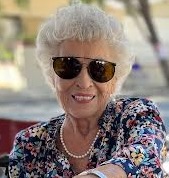
Interviewer: Today is September 28th, 2024. This is an interview with Helen Parga Moraga as part of the Logan Barrio Archive Project. The interview is being conducted at Chepa’s Park, located at 1009 North Custer Street, Santa Ana, California 92701. The interviewer is a member of the Libro Mobile Arts Cooperative Digital Humanities Collective.
Today we’ll be talking to Helen about the 25th reunion of the Logan Barrio. The first question is, where in Santa Ana did you live and what was Logan Barrio like?
Helen: I was born on 1016 Stafford Street, 1926. . How was the Logan? I was a young girl, it was a big family. Just a big family.
Everybody helped themselves. Whatever each had, we had, we were all farmers. Not farmers, but we worked out in the fields for other people. Yeah. And we bring our stuff home like we had leftover beans, we’d bring it home and we give to them to the poorer neighbors. Free beans, tomatoes, whatever we could.
And as far as I know, and as I remember, none of us went hungry. We all had goats. We had our own milk, and we’d share our milk. The mom would have babies. We had our own midwives. From the neighborhood, it was our barrio. Everybody had everything in that one barrio.
Interviewer: What was your favorite thing about being part of the Logan Barrio community?
Helen: Give me a chance to tell ’em all. So really a lot of people came from other states and other countries, they got ideas and somebody else told them a story, but I was the only one to tell because I lived it. I was born and raised here.
Interviewer: What does the 25th reunion at Chepa’s Park in Logan Barrio mean to you?
Helen: Well, it’s not her park only. It was a committee that made our park, not her. And that’s the one thing that makes me mad is all, because it was the committee that made the park, Chepa’s Park, and you know, why we gave her Chepa’s Park?
We chose her as an example.
Interviewer: What’s the best part of attending the reunions for you?
Helen: Oh, I get to see a lot of kids. I get to see, hear the stories. I know that their mommy and dads are dead or all alive. I’m 98. There’s a lot of stories behind that.
Interviewer: Do you have any memories or stories that you wanna share with us?
Helen: Oh boy. Years back, we used to have orange groves, across the street from the railroad tracks. We were, that was about four or five girls that, do you know what destroje is? It’s after the ones that would fall and they would pick them and the last part of them, the ones that would fall because they didn’t fall when they were shaken. We would get ourselves a destroje, and clean up.
So we used to go to the groves, pick one by one, but it was pretty hard enough, clean them up and take them to the OC Title Company on Main and Fifth. That’s all I remember. That was mostly what I remembered, that.
We had a lot of choices. When the boys came home from overseas, all the girls got married off, it was horribly embarrassing because I was old at school. You don’t stop until after you had…a wedding. Yeah, and that must be it. Either that or I was jealous that I had to wait. I don’t know why!
Oh, I got a lot of stories, mijita, so much.
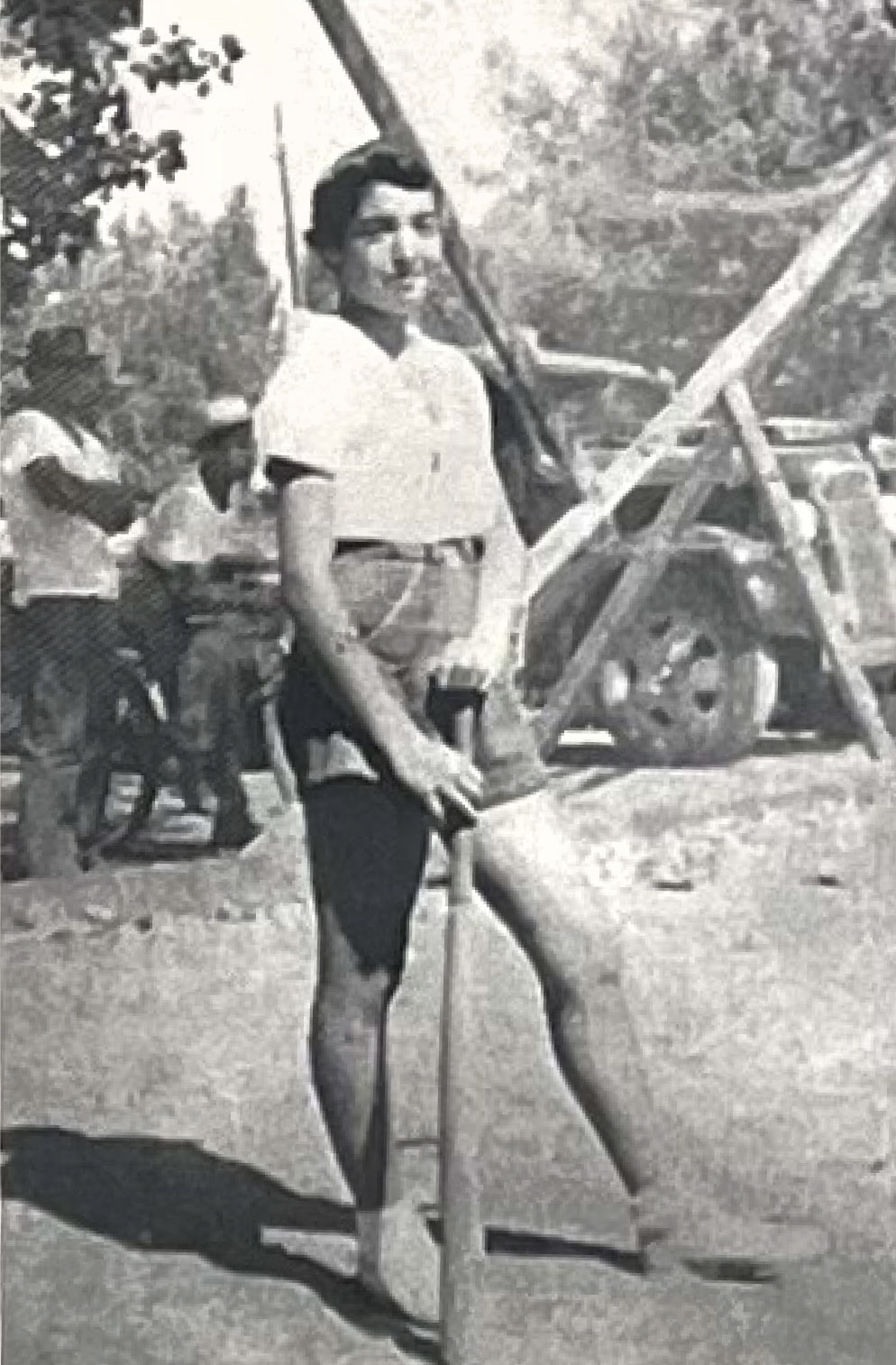
In this image, Helen Parga plays baseball with her family during a weekend outing at Sycamore Flats in 1936. Parga began playing softball two years earlier while attending Franklin Grammar School in Santa Ana.
When a fifth-grade pitcher broke his arm during the playoffs, school staff members wanted Parga to play as substitute pitcher but were forced to obtain special permission from the school board before she was allowed to pitch against an all-boys’ team.
In the 1940s, Helen Parga played for the Lionettes of Orange. Later, Parga worked eight hours a day packing oranges, then practiced nights at Eddie West Field with the Santa Ana Queens. At an away game in Phoenix, Arizona, the Queens made a pit stop at a diner.
Parga, the only Mexican on the team, was told she could not eat with her teammates and was sent to a segregated waiting room. When her teammates learned this, they walked out of the diner in protest.
Image Courtesy of Helen Parga-Moraga, text from the “Images of Baseball: Mexican American Baseball in Orange County,” a book by Luis F. Fernandez, Susan C. Luévano, and Richard A. Santillán (2013).